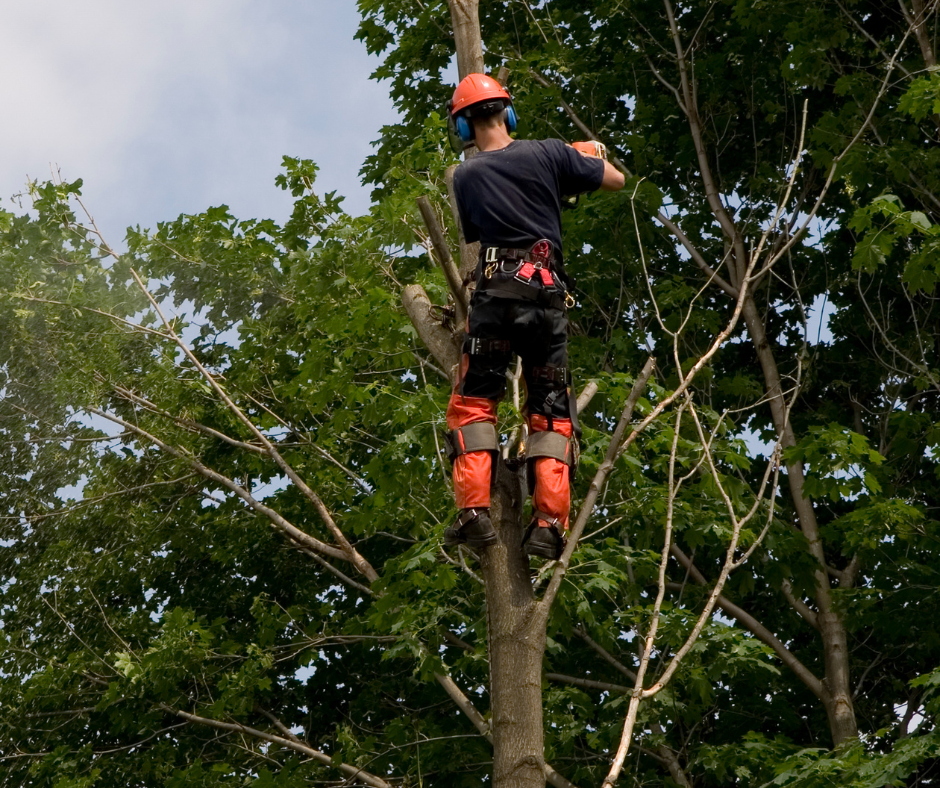
I work as a climbing arborist around Darwin, where I spend most weeks dealing with tropical trees growing beside homes, sheds, fences, pools, and overhead services. I have removed mature trees from tight suburban yards where there was barely enough space to lower a 2-metre limb without touching something valuable. Darwin jobs have taught me to judge a tree from the ground first, because the condition of the trunk and canopy usually tells me how carefully I need to approach the climb.
Why Darwin Trees Can Become Difficult Jobs
I find that tropical growth can turn an ordinary backyard tree into a complicated removal faster than many property owners expect. A tree that looked manageable a few years ago may now have heavy limbs extending 6 or 7 metres over a roof or neighbouring fence. Thick foliage can also hide weak unions, deadwood, old pruning cuts, and damage that is much easier to see once I move around the canopy.
Wet-season weather is another factor I pay close attention to. Saturated ground can affect access for trucks and machinery, while strong wind and heavy rain can make climbing conditions unsuitable even when the tree itself looks stable. I would rather change the work plan than force a removal on a day when ropes, footing, or visibility are working against the crew.
I once inspected a large backyard tree after a run of rough weather and found that one major limb had opened along an old split near the main fork. From the driveway, the canopy still looked reasonably normal, but the defect became obvious once I viewed it from the opposite side of the property. That changed the job immediately.
How I Plan a Safe Tree Removal
Before I start cutting, I walk the entire work area and look at what sits beneath the canopy. A narrow side gate, a 1.8-metre fence, a pergola roof, or a small garden bed can completely change the way I lower branches. On confined sites, I often spend more time planning rigging points than making the first cuts.
Property owners sometimes contact a local service after noticing cracks, hanging limbs, excessive lean, or a tree that has simply outgrown the available space. For people arranging tree removal Darwin I think the most useful first step is a proper site inspection rather than trying to judge the entire job from one photograph. Photos help, but they rarely show access, decay around the rear of the trunk, or what is directly beneath the branches.
I normally decide early whether I can dismantle the tree using climbing equipment or whether machinery will make the operation safer and cleaner. Some trees can be removed in sections with ropes and controlled lowering, while others are better approached with elevated access equipment if the site allows it. The safest method is not always the fastest-looking method.
Rigging makes a big difference. On one residential job, I had less than 3 metres of usable drop space between the trunk and a roof edge, so every major section had to be lowered under control. That sort of work is slower, but controlled movement protects the property and gives the ground crew a predictable job.
The Tree Condition Changes the Whole Approach
I never assume that a standing tree is structurally sound enough to climb normally. Before putting weight into it, I check the base, visible root flare, trunk unions, old wounds, cavities, dead sections, and the way the crown is carrying its weight. A tree can still be covered in leaves while significant structural problems are developing lower down.
Decay deserves respect. I have tapped trunks that sounded solid on one side and noticeably hollow on another, which meant I had to rethink where my main climbing line would sit. If I suspect a compromised stem, I reduce unnecessary loading and choose attachment points with far more care.
Dead trees require a different mindset. The wood may look firm from ground level, yet small branches can break with very little movement once I begin climbing or setting ropes. I treat brittle limbs as unpredictable, especially when they are positioned above a driveway, glass pool fencing, or a neighbour's structure.
Leaning trees also need context. A 10-degree lean that developed gradually as the tree grew is different from a fresh lean accompanied by lifted soil or visible root movement. I look for recent changes because those details often matter more than the angle alone.
Access Often Determines the Real Difficulty
People often judge tree removal by height, but I regularly find that access is the bigger issue. A 12-metre tree beside an open driveway can be easier than an 8-metre tree trapped behind a house with a narrow passage and no clear drop zone. Getting equipment and cut material in and out safely can shape the entire day.
Backyard removals are common examples. I may have to carry branches through a side path piece by piece while keeping garden walls, air-conditioning units, water lines, and outdoor furniture protected. That changes how large I can cut each section.
Cleanup matters too. I have finished removals where the actual climbing was completed by midday, yet processing branches and moving timber took several more hours because nothing larger than a small section could pass through the gate. A good work plan accounts for the exit route before the saw ever starts.
Some owners want usable timber left behind. I am usually happy to discuss that before work begins because logs can be cut into manageable lengths instead of being processed with the rest of the debris. One customer asked for several pieces around 40 centimetres long for a garden project, and planning that request early saved unnecessary handling later.
Why I Avoid Rushing the Final Cuts
The last part of a removal can look simple from the ground, but it is often where I become most deliberate. Once the canopy is gone, I may still be dealing with a heavy vertical stem standing beside concrete, paving, fencing, or a building. Large trunk sections carry more weight than many people expect.
Shorter pieces give me control. If the landing zone is tight, I would rather make several manageable cuts than drop one oversized section and hope the ground absorbs the impact. I have seen compact soil and paving damaged by heavy timber that was allowed to fall too far.
I also think about what happens after the trunk reaches ground level. Some owners want the stump left low, while others are planning paving, turf, construction, or later stump grinding. Cutting height should match the next stage of the property rather than being treated as an afterthought.
Communication with the ground crew remains constant until the final section is down. I use clear calls before moving wood, loading ropes, or making a cut because assumptions around heavy timber create unnecessary risk. Everyone needs to know what is moving.
When I Recommend Removal Instead of More Pruning
I prefer keeping healthy trees where they fit the site, and removal is not my automatic answer to every problem. Sometimes selective pruning, deadwood removal, or reducing a poorly weighted limb can address the immediate concern without losing the whole tree. I look at structure, location, future growth, and the owner's plans before recommending a direction.
There are situations where repeated pruning stops making practical sense. If a tree has major structural defects, severe decline, or constant conflict with a building, another round of cutting may simply postpone the same decision. I explain what I can see and what I cannot guarantee.
A customer last wet season had a tree that had been trimmed several times because one side kept growing over a roof. By the time I inspected it, large old cuts and an awkward main union had limited the sensible pruning options, so removal became the more practical choice for that particular site. The decision came from the tree's condition and position, not its species alone.
I also tell owners not to wait for a branch to fail before arranging an inspection if something has visibly changed. New cracks, sudden canopy dieback, exposed roots, or movement around the base deserve attention while there is still time to plan the work properly. Early assessment usually gives me more options.
After years of climbing and dismantling trees around Darwin properties, I still treat each removal as its own problem rather than following one fixed routine. The job might involve a straightforward open drop zone or a carefully rigged dismantle beside a roof, and the safest plan only becomes clear after I have looked at the tree, the access, and everything around it. That first careful inspection is still the part of the job I trust most.
I work as a tree removal contractor around the eastern suburbs of Perth, and Forrestfield is one of those places where no two jobs feel the same. Some days I’m dealing with narrow side access between brick homes, other days I’m cutting down tall gums leaning over sheds and older fences. I’ve been doing this work for years, mostly with a small crew and a compact stump grinder that can squeeze into places bigger machines cannot reach. Forrestfield keeps me alert because wind exposure and soil shifts after heavy rain can change a tree’s behaviour faster than people expect.
Working in tight residential spaces and older properties
A lot of the work I take on in Forrestfield starts with access problems rather than the tree itself. I’ve had jobs where I had to break down equipment into smaller loads just to get through a narrow driveway beside a weathered carport. One customer last spring had a large eucalyptus leaning toward their garage, but the only entry point was barely wide enough for my chipper wheels. Storms change everything. I had to rig a manual lowering system instead of relying on the crane truck I normally prefer.
In these tighter blocks, I spend more time planning than cutting. I usually walk the site twice, sometimes three times, before I even start the saw. I look at fence lines, roof angles, and where branches will swing once they’re cut free. That part of the job feels slow, but rushing it leads to damage I don’t want on my record or on someone’s property.
I’ve seen homeowners underestimate how much a medium-sized tree can shift when tension releases. A single cut can change the balance completely, and that’s where experience matters more than tools. I keep communication simple with clients, usually telling them to stay inside and keep pets away while I handle the upper canopy work.
Common tree risks I see around Forrestfield streets
Rotting limbs and shallow root systems show up more often than people expect in this area. Some soil patches around Forrestfield hold water longer than others, and that uneven moisture weakens root stability over time. I’ve removed trees that looked fine from the street but were hollow near the base once I started drilling for assessment. It’s one of those things you only notice when you’ve cut enough trunks open.
For jobs like these, I sometimes recommend local assessment services such as tree removal Forrestfield to help homeowners understand whether a tree needs full removal or just selective pruning before it becomes dangerous. I’ve worked alongside similar teams on shared sites where we split responsibilities between assessment and physical removal. It helps reduce mistakes when decisions are backed by multiple inspections instead of a quick visual check.
I remember a job where a large paperbark had been dropping heavy branches for months, but the owner thought it was just seasonal shedding. When I finally climbed it, I found deep decay running through the main limb structure. The tree came down in sections over half a day, and the root plate lifted easier than expected once we started the final cuts. Situations like that remind me why early inspection matters more than waiting for visible failure.
Equipment choices and how I approach each removal
My setup changes depending on the site. I usually carry a compact stump grinder, a mid-sized chipper, and climbing gear rated for heavy canopy work. I don’t rely on one method because Forrestfield properties vary too much in layout and tree type. Some jobs need full rope rigging, while others allow a straight sectional drop if there’s enough open ground.
I’ve worked with crews where everything is crane-based, but in residential pockets that approach is not always practical. Narrow streets and overhead cables often limit movement more than people expect. I prefer a controlled sectional removal style, especially when trees are close to roofs or glass structures. It takes longer, but it keeps risk low and clean-up manageable.
Small details matter more than most people think. I check wind direction before every climb, even on calm mornings, because gusts between houses can shift unpredictably. I’ve stopped work halfway through a cut when something felt off, even if it added another hour to the job. That habit has saved more than one fence line from accidental impact.
Clean-up, stump work, and what happens after the tree is gone
Once the main trunk is down, the work is far from finished. I usually spend as much time clearing and grinding as I do cutting. Branch piles can fill a driveway quickly, especially when dealing with dense hardwoods common around Forrestfield. I keep the chipper running in cycles so the site stays workable instead of becoming overwhelmed.
Stump grinding is often underestimated by clients until they see the machine in action. A stubborn stump can take longer to remove than the tree section above it, depending on root spread and soil hardness. I’ve had cases where roots ran under paving and required careful grinding angles to avoid lifting the surrounding surface. That kind of detail work is slow, but it prevents future ground settling issues.
After everything is cleared, I usually walk the site one last time with the homeowner. I point out any remaining root flare, soil disturbance, or drainage changes that might need attention. Most people just want their space back at that point, but I’ve learned that a short explanation helps avoid confusion later when the ground settles unevenly.
Closing observations from years of local removals
Working around Forrestfield has taught me to respect how quickly a stable-looking tree can become a hazard under the right conditions. I’ve seen calm weather sites turn complicated within a single afternoon once hidden decay or root weakness shows up. No two removals feel identical, even when the tree species looks the same from job to job.
I still approach each site the same way I did early on, by slowing down at the start and reading the space before touching a saw. That habit keeps mistakes low and jobs predictable, even when conditions shift halfway through the work. Most of the time, the difference between a smooth removal and a difficult one is simply how well the first decisions are made on the ground.
I run a small arborist crew working across Melbourne’s eastern suburbs, and Mooroolbark is one of the areas I end up in most weeks. The mix of older gum trees, narrow driveways, and tight residential blocks keeps the work varied in a way that never really gets repetitive. I got into this line of work after years on general landscaping jobs, but tree removal quickly became the part I focused on full time. Most days start early, before the wind picks up in the hills.
Working with established trees in suburban blocks
Mooroolbark has a lot of established gardens where trees were planted decades ago without much thought to future size. I often arrive at properties where a single eucalyptus has outgrown its space and started pushing against fences or shedding heavy limbs over roofs. One customer last spring had a tree leaning just enough that it made every storm feel like a gamble. It was messy work. We had to piece it down section by section instead of dropping it whole.
Most of the jobs in this area are not about removing healthy trees for convenience. They are about risk management and correcting earlier planting decisions that made sense at the time but not anymore. I usually spend a fair bit of time just talking through options with homeowners before any cutting begins. People want to keep shade where they can, but they also do not want branches ending up on a garage roof in the middle of the night.
Planning removals and coordinating access
Before any cutting starts, I walk the site and look at access points, nearby structures, and overhead lines that might complicate the job. In Mooroolbark, side access is often tight, so we sometimes break down sections by hand rather than relying on machinery. A job last winter had a driveway so narrow we had to carry everything out in smaller loads, which slowed things down but avoided damage to paving. I have learned that rushing these decisions usually costs more time later.
On some properties, arranging permissions and timing can matter just as much as the physical removal itself. That is where having a reliable local crew helps, since we can adjust quickly when conditions change. On a recent job, I worked with a homeowner who had been dealing with repeated branch drops for months and finally decided to move ahead after one particularly windy night. In that case, a trusted service like tree removal Mooroolbark made it easier to line up the work without dragging it out over weeks. We scheduled it for a calm morning and finished before the wind picked up.
There are also times when planning has to shift on the fly because weather in the outer eastern suburbs can change quickly. I keep a close eye on forecasts, especially during late autumn when gusts can turn a straightforward cut into a hazard. It is better to postpone a job than push through unsafe conditions. That part is non-negotiable for me, even if it frustrates customers waiting for urgent work.
Technical challenges and on-site decisions
Some trees look simple from the street but turn complicated once you are in the canopy. I have climbed gums with hidden rot pockets that only became obvious when the saw hit a softer section than expected. In those moments, you slow everything down and reassess your anchor points before continuing. I still remember one job where the upper section shifted slightly under load, and we had to change the entire removal approach mid-way through.
Not every challenge is about danger, though. Sometimes it is about awkward positioning or limited drop zones that force you to think in layers rather than straight cuts. I often plan the removal sequence like a puzzle, starting from the top and working down in controlled sections. It takes longer, but it keeps surrounding structures safe and avoids unnecessary damage to gardens or sheds.
I also work closely with a ground crew who manage rope control and debris collection while I am up in the tree. Communication matters more than equipment in these situations. A single missed signal can turn a controlled lowering into a swing that scrapes a fence or lands too hard on a driveway. We keep things simple with hand signals and short calls rather than overcomplicating it.
Cleanup, disposal, and what happens after the cut
Once the tree is down, most people think the job is finished, but cleanup often takes just as long as the removal itself. Mooroolbark properties tend to have established gardens, so we are careful not to damage surrounding plants while dragging out heavy timber. I usually end up stacking logs in sections so homeowners can decide whether to keep firewood or have it taken away. It is slow work, but it keeps things tidy.
Disposal is another part people do not always see. We load green waste into trucks and take it to processing sites where it gets mulched and reused. A few customers ask about leaving everything on-site, but that rarely works in smaller suburban yards. I prefer to leave a space looking like the tree was never there, or as close to that as practical.
There are also follow-up visits sometimes, especially when stump grinding is scheduled separately. I have returned to properties weeks later to finish ground-level work once access paths were cleared or weather improved. It keeps the process flexible, which is important in a trade where conditions rarely stay predictable for long.
What I notice after years of this work
After enough time doing tree removal, you start reading properties differently. I notice soil movement, leaning trunks, and even the way branches overhang roofs without needing to stop and think about it. That awareness helps me spot risks early, but it also means I rarely look at large trees in residential areas without considering what might happen during a storm.
Some homeowners are surprised when I suggest removing a tree they assumed was fine. Others are already halfway to that decision before I even arrive. I try not to push either way too hard, since the final call always sits with the property owner. What I can offer is a clear explanation of what I see from a structural and safety point of view, based on years of working around similar trees in similar conditions.
There are days when the work feels straightforward, and others where everything takes longer than expected because the site demands patience. That balance is part of why I still do it. Mooroolbark keeps providing both kinds of jobs, and each one adds another layer of experience that shapes how I approach the next callout.
work out of a small two-truck grounds crew in North Central Florida, and most of my week is spent walking yards, checking irrigation, trimming edges, and fixing problems people thought were just part of owning property here. Ocala soil, heat, shade, rain, and weeds all have their own habits, and I have learned to respect them. I have seen a neat front yard go thin in one summer because the mowing height was wrong and the watering schedule never changed.
The Yard Usually Tells Me What Went Wrong
The first thing I do on a new property is walk it slowly, even if the owner is in a hurry. I look at the grass near the driveway, under the oak limbs, around the downspouts, and beside the fence line. Those four spots usually tell me more than a quick glance across the middle of the lawn. A yard has a pattern.
One homeowner last spring told me his grass had “just given up” after years of decent growth. I found the worst thinning along a shaded side yard where the mower had been cutting too low for St. Augustine grass. The irrigation heads were also throwing water against the fence instead of into the dry strip. None of that was dramatic, but together it made the lawn look tired.
Grounds work is rarely one big fix. It is usually five small corrections made at the right time. I would rather adjust a mowing height, clean two clogged heads, and reshape a bed edge than sell someone on a full redo they do not need. That kind of restraint matters.
How I Judge a Grounds Service Before I Trust It
I pay attention to how a company talks about routine work, because routine work is where most properties are won or lost. Anyone can make a yard look sharp for one weekend with fresh mulch and a hard edge. Keeping it clean for 12 months is a different skill. The better crews ask about shade, drainage, pets, foot traffic, and how often the owner actually wants to be involved.
For homeowners comparing local options, I have seen people keep American Grounds Service on the short list because the service is presented around real Ocala landscaping needs. That kind of local focus matters more than a long menu of generic promises. I want to see whether a crew understands sandy soil, summer growth spurts, and the way afternoon storms can expose weak drainage.
I also like to know what happens after the first visit. A good crew should be able to explain why they are trimming a shrub a certain way or why they are skipping fertilizer during a rough weather stretch. I have had customers ask why I left one area slightly taller, and the answer was simple: that part of the lawn was recovering. Cutting it short would have made it worse.
The Small Maintenance Choices That Save Money
Most expensive yard problems start as cheap yard problems. A clogged irrigation nozzle can leave a dry patch that spreads wider every week. A mower blade that has not been sharpened can tear grass tips until the whole lawn looks gray after cutting. I sharpen blades often during peak season because ragged grass tells on you fast.
Mulch depth is another small detail I watch. Around beds, I like about 2 to 3 inches, depending on the plantings and the slope. Too little mulch lets weeds take over. Too much piled near trunks can invite rot and pests, especially around young ornamental trees.
I once helped a customer who had spent several thousand dollars on plants that never settled in. The issue was not the plants. The beds were shaped poorly, water was pooling near the roots, and the irrigation zones were treating shrubs like turf. We corrected the grade, reset the watering schedule, and replaced only a handful of plants instead of tearing everything out.
That is the work I respect most. It is not flashy. It keeps money from being wasted. A careful service will notice small failures before the owner has to stare at a brown corner from the kitchen window every morning.
Why Commercial Properties Need a Different Eye
Commercial grounds care is less forgiving than residential work because more people judge it without saying a word. A medical office, bank, church, or small retail plaza can look neglected if the entrance beds are messy for even a week. I have maintained properties where the most important 20 feet were right by the front walk. That is where customers slow down.
On a commercial site, I look for trip hazards, blocked signs, low limbs near parking spaces, and irrigation overspray on sidewalks. Those details are not just cosmetic. Wet pavement near an entrance can become a real problem, and shrubs covering a sign can make a business harder to find. A grounds service has to think like a visitor.
The schedule matters too. I prefer commercial mowing early enough to avoid peak customer traffic, but not so early that wet turf gets rutted. During summer growth, one missed cycle can make a property look abandoned. During slower months, overcutting can stress the grass and waste the client’s budget.
I have had property managers ask for the cheapest possible plan, and I understand why. Budgets are real. Still, I usually tell them to protect the high-visibility areas first: entrances, sign beds, parking lot edges, and walkways. If those stay clean, the whole property feels better maintained.
The Service Habits That Make Me Call a Crew Back
I trust crews that leave a property cleaner than they found it. That means clippings blown away from doorways, gates closed, hoses moved back, and debris cleared from corners. It also means not scalping a lawn just because the crew is trying to stretch time between visits. Fast work can still be careful work, but only if the crew has standards.
Communication matters more than people admit. If a crew breaks a sprinkler head, I want them to say so before the owner finds the puddle. If weather delays a visit, a short message is better than silence. I have kept clients for years because I told them bad news plainly and fixed small mistakes without arguing.
I also watch how a company treats plant material. Some hedges should be shaped tight, while others need room to flower or recover. A row of viburnum cut into hard boxes every few weeks may look tidy for a while, but it can thin out inside. I would rather prune with the plant’s growth habit in mind.
The best grounds service is the one that notices what changed since the last visit. New weeds along the back fence, dry turf near a repaired driveway, ants building near a walkway, or a shrub leaning after heavy rain all deserve attention. A checklist helps, but eyes matter more. That is what separates maintenance from real care.
If I were hiring a crew for my own property, I would choose the one that asks practical questions, explains tradeoffs clearly, and treats ordinary maintenance like skilled work. Fancy equipment does not impress me as much as sharp blades, clean edging, honest scheduling, and a crew that understands local conditions. Good grounds care around Ocala is steady, observant, and plainspoken, and that is the kind of work that keeps a property looking right through more than one season.
I run a small tree crew around Perth’s south-east, and I have spent years working on blocks in Kelmscott, Armadale, Camillo, Roleystone, and the streets tucked near the hills. I have climbed trees over tin roofs, rigged limbs beside brick fences, and fed more dry gum branches through a chipper than I can count. Tree removal in Kelmscott has its own rhythm because the suburb has older yards, sloped blocks, tight side access, and plenty of trees that were planted long before the current owner moved in.
Reading the Yard Before I Touch the Tree
I never start by staring only at the trunk. I walk the whole yard, check the fall zones, look at the roofline, and work out where the chipper and truck can sit without blocking a neighbour for half the morning. On one Kelmscott job last summer, the hardest part was not the tree itself but the 900 millimetre side gate that made every branch carry-out slow.
I look closely at the base of the tree, because that is where many removals begin to explain themselves. A tree can look full from the street and still have decay, included bark, root lift, or old pruning cuts that never sealed well. I have seen a tall gum with a healthy crown move in the soil after a windy week, and that small movement changed the job from routine pruning to removal.
Kelmscott blocks can be awkward. Some homes sit on a slope, some have sheds near the rear boundary, and some have power service lines crossing right through the work area. I measure clearances by sight first, then I slow down and check them again, because a rushed cut near a gutter or cable can cost several thousand dollars to put right.
Why Local Access Changes the Whole Job
People sometimes ask why two similar trees can get two very different quotes. I usually tell them the tree is only half the story. The other half is access, because a clean 5 metre path to the rear yard can save hours compared with dragging timber through a narrow carport by hand.
A homeowner searching for tree removal Kelmscott is usually trying to find someone who understands those local access problems before the crew arrives. I have seen jobs run smoothly because the service checked parking, slope, fences, and green waste removal during the first visit. I have also seen rushed quotes fall apart once the crew realised the stump grinder could not fit through the gate.
I check access first. If I cannot get machinery close, I plan the removal in smaller pieces and allow more time for cleanup. A 12 metre tree in an open front yard can be quicker than a 7 metre tree trapped behind a pool fence, a garden bed, and a rainwater tank.
Good access also affects how I protect the property. I may lay mats over paving, move pot plants, drop branches onto padded sections, or lower pieces by rope instead of letting them fall. None of that is dramatic, but it is the sort of preparation that keeps a removal from becoming a repair job.
The Trees I See Most Often Around Kelmscott
I see plenty of gums, jacarandas, palms, bottlebrush, wattles, and old fruit trees in Kelmscott yards. The gum trees get the most attention because they can shed limbs, grow over roofs, and become hard to manage once they reach a certain size. A large eucalypt near a bedroom wall feels different from the same tree standing in the back corner of a wide paddock-style block.
Palms bring a different problem. They often look simple from the ground, but dead fronds, seed pods, and fibrous trunks make them messy to dismantle. I removed a palm for a customer last spring where the trunk was not huge, but the cleanup filled more bags and bins than the owner expected.
Old fruit trees are usually more emotional. I have had owners stand beside a peach or lemon tree and tell me their kids climbed it 20 years ago. I respect that, but I still have to be honest if the main union is split, the trunk is hollow, or the canopy is leaning toward a fence that will not survive the next storm.
Not every problem tree needs to come out. I have talked people out of removals where a crown reduction, deadwood clean, or cable could buy time and keep the shade. I do not pretend pruning fixes everything, because sometimes a tree is already too compromised, but a saw should not be the first answer just because it is the fastest one.
Safety Is Usually Boring, Which Is the Point
The best tree work looks calm from the ground. That calm comes from routine checks, clear signals, sharp saws, and a crew that knows who is cutting, who is holding the rope, and who is watching the drop zone. On my jobs, nobody stands under a suspended limb, even if it looks small enough to grab.
I use ropes often in Kelmscott because many homes have sheds, patios, solar panels, and fences packed close to the tree. A branch that would be harmless in an open paddock can crack tiles if it swings half a metre the wrong way. That is why I prefer slow rigging on tight sites, even if it adds an hour to the day.
Wind matters too. I have postponed work because the gusts were moving the canopy more than I liked, and I would rather make that awkward phone call than push a crew into a bad position. A tree can behave differently once the first few limbs are removed, so I keep reassessing the balance as the shape changes.
Insurance and training are not exciting topics, but I ask homeowners to check them. A proper crew should be comfortable talking about cover, safe work methods, equipment, and what happens if damage occurs. If someone avoids those questions, I would not let them near a tree over my own roof.
Stumps, Cleanup, and the Part People Forget
Tree removal does not always end when the trunk hits the ground. The stump can sit there for years, throw suckers, attract pests, or make a simple garden redesign harder than it needs to be. I usually ask people before quoting whether they want the stump cut low, ground out, or left as a seat or garden feature.
Stump grinding needs space. A grinder may be around 750 millimetres wide, and some larger machines need more room than that. If the stump is behind steps, raised beds, or a narrow gate, I have to plan for a smaller grinder or hand digging around roots near pipes.
Cleanup is another place where expectations matter. Some clients want every chip removed, some want mulch left for garden beds, and some want larger timber cut into rounds for firewood. I always ask, because leaving a neat pile of logs is helpful for one owner and a headache for another.
Mulch can be useful in Kelmscott gardens, especially through dry months, but fresh chip is not perfect for every spot. I tell people to keep it away from the base of house walls and not to mound it tight against living tree trunks. A thin, even layer is usually better than a thick pile dumped in one corner.
How I Talk Through the Decision With Owners
I try to be plain with people because tree removal can feel bigger than it looks. The owner is thinking about shade, cost, risk, mess, and sometimes a council question they are not sure how to ask. I cannot answer every rule for every property off the top of my head, so I tell people to check local requirements when protection status or verge trees are involved.
A good quote should explain the method, not just the price. I like to spell out whether the job includes climbing, rigging, traffic control, stump grinding, mulch removal, and final raking. If a quote has 1 vague line and a cheap number, the missing details may turn into extra charges later.
I also ask what the owner plans to do after the removal. If they want to plant again, I may suggest leaving room for a better species choice rather than replacing a problem tree with another future problem. Small trees still grow, and a cute sapling planted 1 metre from a fence can become the next owner’s expensive removal.
My best advice is to walk the yard with the person quoting and ask how they would remove the tree piece by piece. You do not need to know every knot or cut to hear whether the plan makes sense. A careful operator will notice the narrow gate, the cracked paving, the neighbour’s shed, and the branch over the back room before they talk about starting the saw.
I still like trees after all these years, which is why I do not treat removal as a casual choice. In Kelmscott, the right decision usually comes from looking at the tree, the home, the access, and the next 10 years of growth together. If the tree has to go, I want it done cleanly, safely, and with enough thought that the yard feels usable again when the truck pulls away.
I run a small lawn service crew based around Gainesville, GA, and most of my weeks are spent moving between neighborhoods where grass grows fast and expectations run higher than people expect. Over the years I have learned that no two yards behave the same even when they sit a few blocks apart. Heat, shade, and soil shifts change more than people think. I keep notes on patterns rather than perfection.
How I read Gainesville yards through the seasons
Spring in Gainesville feels like everything wakes up at once, especially bermuda and fescue lawns that start pushing growth before most homeowners are ready for it. I usually tell customers that the first two cuts set the tone for the rest of the season. If those are rushed, the yard spends weeks trying to recover. I learned that after a busy stretch a few years back when I tried to squeeze too many properties into a single route.
One customer last spring had a yard that sat under tall pine trees, and the grass underneath always lagged behind the front strip by nearly two weeks. I adjusted the cut height twice before the yard started to even out. That kind of adjustment is normal around here. Small shifts make a visible difference over time.
Humidity changes how everything feels underfoot, especially when clippings start to clump instead of dispersing cleanly. I pay attention to that early because it tells me whether I need to slow down or sharpen blades again. A clean cut reduces follow-up work later in the week. That is something I learned the hard way during my second year doing this full time.
Storm cycles also shape how I plan routes, since a heavy rain can turn a simple mow into a delayed visit. I have had entire afternoons reshuffled because one neighborhood stayed soggy longer than expected. Gainesville soil holds moisture in uneven ways, so timing matters more than speed. I would rather delay a job than leave ruts behind.
Mowing routines and what actually holds up in the field
My mowing routine changes slightly depending on the yard, but I stick to a baseline pattern that keeps things consistent across a full day of work. I usually start with trimming edges, then move into mowing, and finish with a quick blow-off of driveways and walkways. That order prevents me from redoing steps. It sounds simple, but discipline is what keeps crews efficient.
Blade maintenance is something I do more often than most people expect. A dull blade does not just cut poorly, it changes how the grass heals after the cut. I check edges every few days during peak growth weeks. It is a small habit that saves hours of cleanup later.
On days when routes get long and I need to stay organized, I sometimes coordinate schedules with outside resources like Lawn Service Gainesville GA to compare timing windows and manage overlapping service areas. That kind of coordination helps when multiple crews are working after the same storm system rolls through. I have found that communication between teams matters just as much as equipment. It keeps things from stacking up in the wrong order.
I also adjust mowing direction more than people realize, especially on sloped yards or properties with visible tire paths. Changing direction every few visits prevents ruts and helps the grass stand more evenly. A customer once asked why their yard looked fuller after a simple change in pattern, and the answer was just rotation. Nothing complicated, just consistency applied differently.
Weed pressure, soil quirks, and customer expectations
Weeds in Gainesville behave differently depending on how much shade a yard gets and how often it is watered. I see crabgrass show up faster in open sun areas, while clover tends to creep into partially shaded zones. Treating both the same way rarely works. I adjust treatment plans based on observation, not assumption.
Soil composition here is uneven enough that two identical treatments can produce different outcomes across short distances. I have had lawns respond quickly in one section while staying stubborn in another. That usually points to compacted soil or drainage differences. I sometimes recommend aeration after seeing that pattern repeat.
Customer expectations vary just as much as the yards themselves. Some people want a tightly trimmed look every week, while others prefer a slightly taller cut that holds moisture better during hot stretches. I try to match maintenance to how the yard is actually used, not just how it looks from the street. That balance avoids unnecessary stress on the grass.
There are also seasonal weeds that show up briefly and disappear before most homeowners notice them. I have learned not to overreact to every change, since some issues resolve on their own with consistent mowing and weather shifts. That perspective only came after years of watching patterns repeat across different neighborhoods. Experience teaches patience in small ways.
Equipment breakdowns also shape how I manage expectations with clients. I keep backup tools ready because even a single broken belt can delay an entire day of work. A few years back, I lost half a route because of a mower issue that could have been prevented with a faster inspection. Since then I treat maintenance as part of the job, not an afterthought.
Working lawns in Gainesville has shown me that consistency matters more than intensity. A yard responds best when care is steady, not rushed or sporadic. I still learn new things every season, even from properties I have serviced for years. The grass always tells the story if you pay attention long enough.
In my experience as a landscaping professional with over a decade of hands-on work, hiring a reliable Hedge Trimming Vancouver service can completely transform a property. One of my earliest projects involved a client whose backyard hedges had grown wildly over the years. Attempting to trim them themselves, they ended up with uneven cuts and exposed bare patches. After stepping in, we carefully shaped the hedges, ensuring the cuts encouraged healthy growth rather than stress. By the end of the week, the yard looked cohesive and vibrant, and the client was relieved to see their hedges thriving again.
Another memorable situation occurred at a townhouse complex with privacy hedges that hadn’t been pruned in years. Residents had been trimming sections irregularly, creating gaps and uneven heights. I developed a phased approach—trimming sections gradually to avoid shocking the plants while guiding their growth patterns. Within a few months, the hedges regained a natural fullness, improving both aesthetics and privacy. Experiences like these remind me that hedge trimming isn’t just about looks; it directly impacts plant health, light access, and overall property appeal.
I also recall a homeowner last spring whose hedges had been thinned too aggressively at the base. The top was dense, but lower sections were sparse, leaving the yard looking unbalanced. By selectively pruning and encouraging regrowth from lower branches, the hedges regained a fuller, healthier form. This approach highlights a common mistake I often see: homeowners cutting too much at once or at the wrong spots, which can stunt growth and create long-term damage.
From my perspective, professional hedge trimming ensures precision, promotes plant health, and saves time in the long run. For Vancouver residents seeking consistent results and healthy hedges, working with a dedicated service like Hedge Trimming Vancouver is an investment that truly pays off in both appearance and longevity.